Beyond the Till: A Guide to Cash Registration and the Future of Payments in Canada


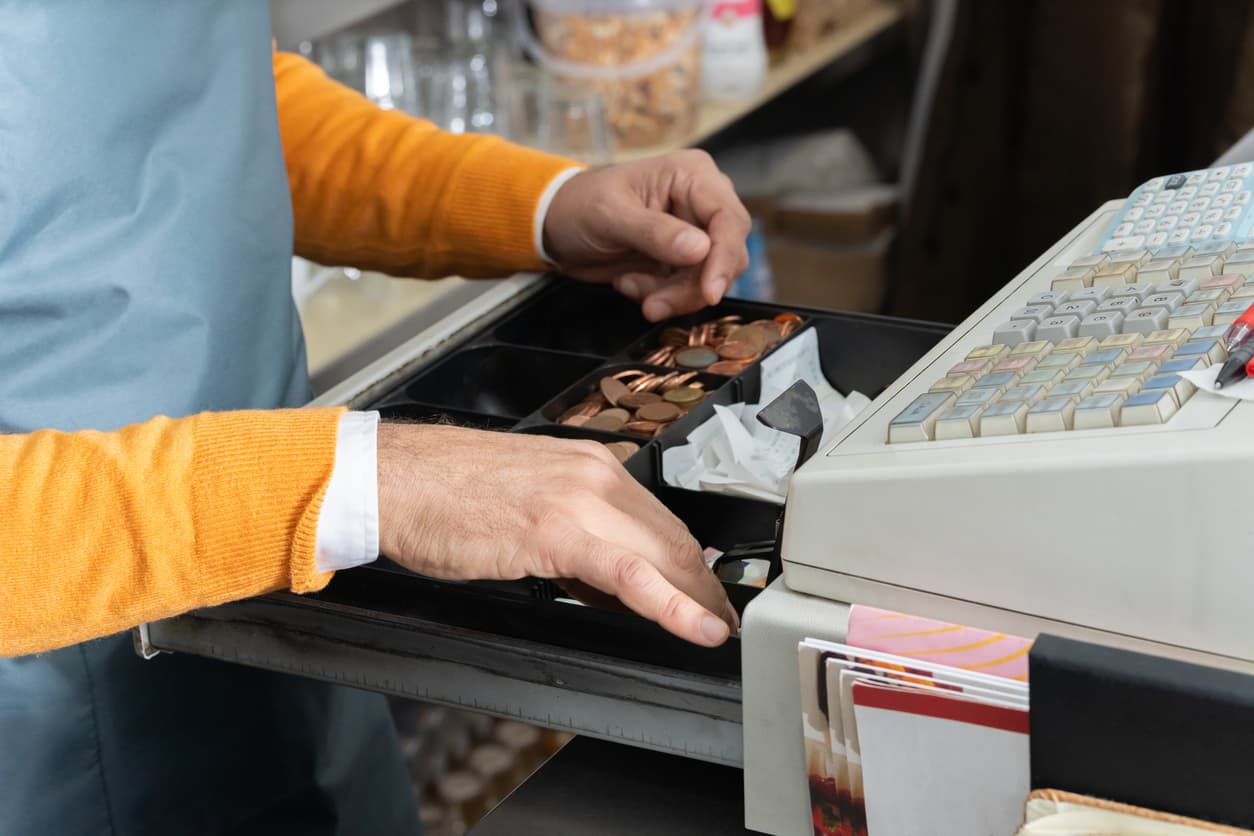
Still using a traditional cash register? Discover the pros and cons of classic cash registration and why Canadian SMEs are switching to smart payment terminals for better security and faster sales.
In Canada’s fast-moving retail and F&B sectors, the term "cash registration" has evolved from the physical act of ringing up a till to a complete digital transformation. Whether you are running a boutique in Montreal or a busy café in Vancouver, how you handle payments is the pulse of your business.
This guide explores the transition from the classic cash register to the modern payment terminals and POS systems that are defining the future of Canadian businesses.
What is a Cash Register?
A cash register is a mechanical or electronic device used for calculating and recording sales transactions. Historically, it was designed with one primary goal: to provide a secure place for cash and to ensure that every cent was accounted for through a printed audit trail.
For over a century, the cash register was the centerpiece of the Canadian storefront. It handled the basics:
- Calculating totals (including GST/HST/PST based on your province).
- Providing a secure cash drawer.
- Printing simple receipts for customers and end-of-day reports for the owner.
Benefits and Disadvantages of Traditional Cash Registers
While many Canadian SMEs are moving toward digital solutions, it is important to understand why some still hold onto the traditional cash register.
The Benefits
- Low Upfront Cost: You can purchase a basic electronic cash register for a one-time fee, often under CA$400, with no ongoing monthly software subscriptions.
- Simplicity: They are easy to use. Training a new hire to key in numbers on a keypad takes minutes.
- Offline Reliability: Since most traditional registers don't require an internet connection to function, your business won't stop if the Wi-Fi goes down.
The Disadvantages
- Manual Errors: Typing in prices manually leads to frequent mistakes, which can skew your books and frustrate customers.
- Zero Inventory Insight: A cash register tells you how much money you made, but it can’t tell you that you’re running low on your best-selling Canadian-made candles.
- Fragile Security: While they have a lock, traditional registers offer limited protection against administrative discrepancies or employee theft compared to digital logs.
- Payment Friction: Most basic registers require a separate, non-integrated card terminal. This means you have to type the amount twice (once on the register and once on the card reader), doubling the chance of error.

The Shift: Why Payment Terminals are Taking Over
The era of the standalone cash register is fading. Today, Canadian merchants are replacing cash registration hardware with Integrated Payment Terminals and Cloud POS Systems.
The main driver? Consumer behavior. According to Payments Canada, credit and debit cards now account for the vast majority of transaction volume in the country. A machine that only prioritizes cash is no longer sufficient for businesses.
How Payment Terminals Compare to Cash Registers
Feature | Traditional Cash Register | Modern Payment Terminal / POS |
Payment Types | Primarily Cash; requires external card reader. | All-in-one: Tap, Chip, Mobile Wallets, and Cash. |
Internet | Not required. | Required (Cloud-syncing). |
Inventory | Manual tracking only. | Real-time automatic stock updates. |
Reporting | Basic paper rolls (Z-reports). | Deep digital analytics via phone or laptop. |
Speed | Slow manual entry. | Ultra-fast barcode scanning and syncing. |
The Benefits of Modern Payment Terminals
When you move your cash registration to a modern payment terminal, like a KPay Smart Terminal, you aren't just getting a new way to swipe cards, you're gaining a valuable tool for your business.
Unified Workflow
Modern terminals eliminate the need for a separate cash register. The "plus" in Interchange Plus pricing models becomes even more valuable when your terminal acts as your register. You enter the amount once, and the terminal handles the tax, the payment, and the inventory deduction simultaneously.
Deep Data Analytics
A traditional register can't tell you that your busiest hour is 2:00 PM on Tuesdays. Modern terminals provide a dashboard where you can see:
- Top-selling items.
- Employee performance.
- Customer loyalty patterns.
Portability and Efficiency
In a busy Canadian retail environment, you don't want customers stuck at a fixed counter. Mobile payment terminals allow your staff to process sales anywhere in the store, or even at a pop-up market, helping you accept payments conveniently and keeping your customers happy.
Future-Proof Security
Modern terminals are PCI-compliant and use end-to-end encryption. Unlike a paper journal in a cash register, your sales data is backed up to the cloud, meaning even if your hardware is damaged, your business records are safe.

Transforming the Merchant Experience Across Industries
Given that modern payment terminals have evolved far beyond simple card readers into a core part of the business that streamlines operations across various industries, the payment experience has inevitably evolved as well. In the retail and boutique sector, these terminals remove the need for long lines by allowing staff to process transactions anywhere on the sales floor. Instead of forcing customers to wait at a fixed counter, employees can use portable smart terminals to check stock, apply discounts, and finalize sales right where the customer is standing. This mobility is particularly effective during peak shopping seasons or for pop-up events, where space and speed are at a premium.
In the F&B and hospitality industry, modern payment terminals have revolutionized the table-side experience. Servers can now take orders and process payments directly at the table, reducing the back-and-forth travel to a central station. These devices often integrate with kitchen display systems, ensuring that modifications or dietary requirements are transmitted instantly. Furthermore, they simplify complex tasks like splitting bills or adding tips, which enhances customer experience and improves table turnover rates during busy lunch or dinner rushes.
For service-based businesses and professional clinics, such as medical aesthetics or automotive repair shops, payment terminals are essential for managing high-ticket transactions through flexible financing. Modern terminals come pre-loaded with software that supports Buy Now, Pay Later (BNPL) and network-led installment plans like Visa's installment plans. Merchants are able to offer a patient or customer a manageable monthly payment plan for a premium treatment or service right at the point of sale, without the friction of a separate bank application. This capability turns the terminal into a powerful upselling tool that directly increases the average transaction value.
Finally, modern terminals serve as important data and inventory management tools for small and medium enterprises. Every transaction is logged in real-time and synced to a cloud-based dashboard, giving owners instant access to sales trends, peak hours, and staff performance metrics. For businesses that manage physical goods, the terminal can automatically deduct items from inventory as they are sold, alerting the owner when stock levels are low. By centralizing payment, reporting, and inventory in one device, these terminals allow business owners to spend less time on manual administration and more time on strategic growth.
Is it Time to Retire Your Cash Register?
If you are a micro-business handling only a few transactions a day, a traditional register might suffice. However, for any Canadian business looking to scale, the move toward integrated payment terminals is essential. By ditching the manual till for a digital system, you save time, reduce errors, and provide the seamless "tap-and-go" experience that Canadians expect.